Behind the Build: OVERTAKE VA WRX Air Intake
The OVERTAKE VA WRX air intake has been in development for over a year. It is not on sale yet. It will not be on sale for a few more months. The reason it has taken this long is the same reason the rest of this post exists: doing an intake right means making real engineering decisions, testing them, and then testing them again with the data in front of you. This post is a development update covering where the project started, the design choices that shaped it, the dyno testing that validated the MAF housing sizing, and roughly when you can expect to see it released for the VA chassis. Fitment is the VA-generation Subaru WRX, with a VB version in co-development.
If you want the full engineering breakdown straight from Chase, the OVERTAKE VA intake development thread is on r/WRX. For the rest of you, here is the shorter read.

What This Intake Is and Why It Has Taken a Year
Most aftermarket Subaru intakes for the last twenty years have followed the same pattern: a cone filter, an aluminum tube, and if you were lucky, a sheetmetal heatshield. They worked. They made power. Many of them were our lead engineer Chase's own designs from his time before OVERTAKE.
The VA intake currently in development is not that. It is a full rotomolded airbox and snorkel assembly that mounts to the factory chassis points, plus a redesigned post-MAF tube. The reason for going this far is that the easiest gains in an intake are not from colder air. The bigger gains come from reducing restriction: shorter air path, fewer and gentler bends, a better-flowing filter, and a MAF housing that does not throw the ECU's math off. Every one of those required design work.
Chase started putting pen to paper on this last year. The company is just over a year old. Development on this intake has been running essentially the entire time OVERTAKE has existed. End-of-summer 2026 is the projected release window.
How Do You Start Designing an Intake from Scratch?
The first design decision was a big one: do not use sheetmetal. Go to a rotomolded airbox. Once that was settled, the question became where to put the airbox. The original idea kept the front half of the factory airbox and ran a cone filter from there. That works on the VB platform, where the carbon filter mounts in the front half. On the VA, it does not. Once Chase actually fit the prototype, there was no room left for the filter.
So the airbox got redesigned. And once the airbox was getting redesigned, the snorkel got redesigned. The result is a 100% direct replacement: the OVERTAKE airbox mounts to the factory chassis points, and the OVERTAKE snorkel takes the same path the factory snorkel takes. From above, the snorkel sits in the same spot. It is just much, much larger.

The Snorkel Does More Than Bring in Cold Air
Most discussions of the factory snorkel focus on cold air. The factory snorkel does bring cold outside air into the engine bay, and a snorkeled intake usually shows lower inlet temperatures than one without. What does not get discussed is that the factory snorkel is also a resonator. Subaru calls it that. The underside has a tiny outlet, lots of twists and turns, and the whole thing is essentially a muffler for the intake side so the average dealership customer does not hear the turbo and assume something is wrong.
The OVERTAKE snorkel keeps the cold-air-from-outside function, but throws out the muffler function. The inlet is large, the outlet is large, the internal path is smooth, and the cross-section stays open all the way through. It is also large enough to act as additional airbox volume, which directly improves throttle response. When the throttle blade opens, more air is already sitting in the snorkel waiting to be pulled. That is one of those small things that race cars do and aftermarket parts usually do not.
The Divider in the Snorkel Has a Job
There is a vertical divider in the neck of the snorkel that, on first look, appears to be a support rib. It does provide rigidity. It also distributes airflow more evenly around the filter. On a previous intake Chase designed, the front of the filter (facing the snorkel outlet) would load up with debris and leaves within a few months, and the rest of the filter would be doing all the work. The divider rotates flow in both directions around the filter so debris distributes more evenly. The filter lasts longer in real-world use without adding restriction, because restriction only starts at the filter itself.
Why the MAF Housing Diameter Matters More Than People Realize
This is the part where development time really stacked up. The Mass Airflow Sensor measures the speed of air across it, and the ECU calculates the mass of air by combining that speed with the known cross-sectional area of the housing. If the housing diameter changes, the math changes. The ECU does not know the housing changed. It just sees a different reading and makes decisions based on what it thinks is happening.
The common rule on forums is "match the stock diameter and you will be fine." Chase tested that. He printed a MAF housing that matched the stock 70mm diameter, ran it on the dyno on a stock-tuned car, and at higher RPM the knock sensor pulled timing because the ECU thought the engine was under less load than it actually was. Same diameter, different geometry around it, different result.
The fix was to print and test housings in half-millimeter increments until the fuel trims and calculated load on the stock tune behaved close to the way they do on the factory airbox. The housing diameter Chase landed on is in the high-67mm range. Smaller than stock by a couple of millimeters, larger than the 66mm housing that some other intakes on the market use. On the dyno, with everything else equal, the result was an increase of about 10 horsepower across the rev range, peaking near 15 horsepower at 5500 RPM, without the timing pull that the stock-diameter housing produced. All of that gain came from reduced pressure drop before the turbo, not from running more aggressive timing.
If that sounds like a lot of words to spend on intake math, the Reddit thread spends many more. The dyno charts, the fuel trim curves, the calculated load comparison, and the ignition timing pull on the 70mm housing are all in there with the numbers attached.
Who This Intake Is For
This is a complete intake system replacement. It is a real engineering project, not a drop-in filter.
If you daily-drive a VA WRX and you want a meaningful pre-turbo restriction reduction without compromising filtration or running a tune that has to band-aid a poorly sized MAF housing, this is built for you. If you autocross or track the car, the extra airbox volume and the cleaner flow path help, and the MAF sizing means you can run it with confidence on a stock tune or a custom tune without the housing throwing the math off.
If you are looking for a $150 drop-in cone with a sticker on it, this is not that. The development cost and the production cost are different from a part that took six weeks to bring to market. The trade is parts that do what they claim and do not knock at wide-open throttle on a stock tune.
When Can You Actually Buy This?
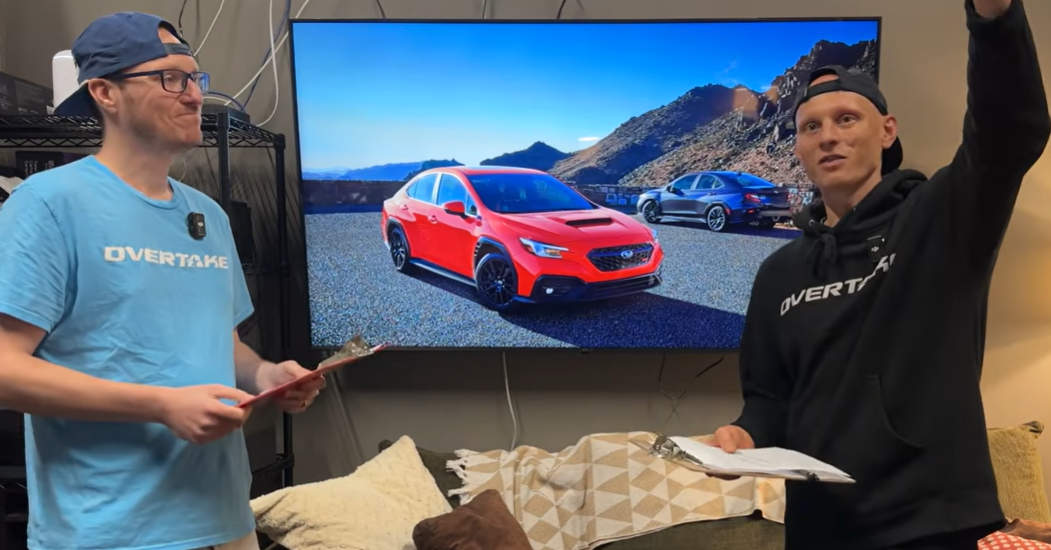
Per Art in the video, end of summer 2026 is the target release window. That is roughly a year and a half of total development by the time it ships. The remaining work is final validation: more on-road datalogs in varied conditions, direct stock comparison testing, and the production tooling that comes after the prototype phase is locked.
The VB WRX version is being co-designed alongside the VA. There will be continuity between the two designs, so a VA owner who upgrades and then trades into a VB later will recognize the family of parts.
If you want development updates as they happen, the best places to keep up are OVERTAKE's YouTube channel (where Art and Chase are doing periodic build updates like this one), the Reddit thread linked above (Chase replies in the comments), and OVERTAKE's social channels at overtakeusa.

Want the Full Engineering Breakdown?
Chase wrote a development thread on r/WRX that goes much deeper than what fits in a blog post: the dyno charts, the MAF housing sizing process, the calculated load comparison across different diameters, and the ignition timing pull on the stock-sized housing. Read the full OVERTAKE VA intake development thread on Reddit if you want the data behind the design choices.
In the meantime, the OVERTAKE Charge Pipe and Turbo Inlet are already available for the VA WRX, and the dyno car in Chase's testing was running both. If you are looking to start reducing pre-turbo restriction now while the intake finishes development, those are the parts that pair with it.
Frequently Asked Questions
When will the OVERTAKE VA WRX intake be available?
Per Art in the development video, end of summer 2026 is the projected release window. Total development time at release will be approximately a year and a half. Periodic updates are being posted on OVERTAKE's YouTube channel and across social channels.
Will there be a VB WRX version?
Yes. The VB intake is being co-designed alongside the VA. There will be continuity between the two designs, and the VB version is also planned for late 2026 or early 2027 if development stays on schedule.
Can I pre-order or get on a waitlist?
Pre-orders are not currently being taken. The best way to be notified when the intake is released is to follow OVERTAKE on YouTube, Reddit, Instagram, and TikTok at overtakeusa, and to subscribe to OVERTAKE email updates if you have not already.
Why does the MAF housing diameter matter on an intake?
The MAF sensor measures airflow speed, and the ECU calculates mass airflow using the known cross-sectional area of the housing. Change the housing diameter and the math changes, even though the sensor itself is the same. The ECU does not know the housing has changed and will make ignition timing and boost decisions based on incorrect calculated load. On a stock tune, a housing diameter that is too far off the stock value can cause the knock sensor to pull timing at high RPM. The OVERTAKE housing diameter was selected through dyno testing of multiple printed sizes to keep calculated load close to factory values on the stock tune.
Will this intake require a tune?
Per Chase's dyno testing, the OVERTAKE VA intake is designed to behave safely on the stock tune by keeping the MAF housing dimensioned so that calculated load stays within a normal range. A custom tune will always produce better results for any intake, but the design intent is that this intake does not require a tune to be safe at wide-open throttle. Final fitment and tuning recommendations will be confirmed at release.